Live events are complex environments where timing, communication, and teamwork all have to work together. From the first delivery arriving on site to the final case being loaded out, every stage depends on people who understand the pace and requirements of event production.
For organizers, venues, and production companies, the challenge is not simply finding enough crew. The real task is building a team that can adapt quickly, work safely, and coordinate efficiently with technical departments, suppliers, and local partners.
Good crew planning starts before the event
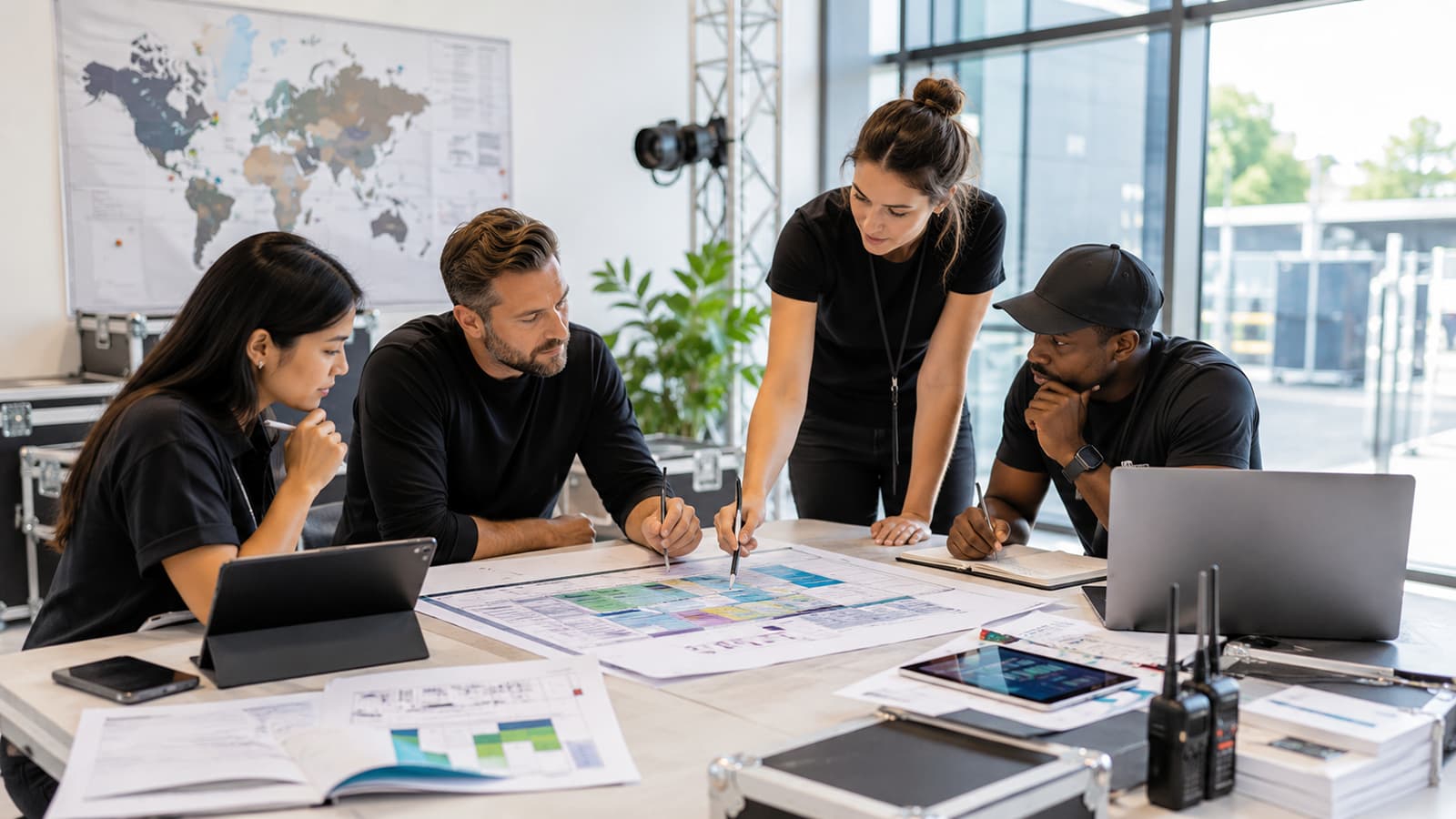
A well-planned crew setup starts long before the first person arrives on site. Project scope, schedules, access times, technical requirements, and local conditions all influence how many people are needed and which skills are most important.
The earlier these details are aligned, the easier it becomes to react when plans change. A clear briefing also gives teams a better understanding of priorities, responsibilities, and the overall production schedule.
A practical planning process should usually cover:
- Crew size and required skill sets
- Call times and expected working hours
- Venue access and loading conditions
- Safety requirements and local regulations
- Responsibilities between departments
- Communication channels and key contacts
- Backup plans for schedule changes
Local knowledge can make a real difference
Local teams can bring more than additional manpower to a production. Familiarity with venues, logistics, regional working practices, and local infrastructure can reduce unnecessary complexity.
This becomes especially valuable for international projects. Combining central coordination with experienced local crews can create a structure that is both consistent and flexible.
“The best crew solutions are not only about numbers. They are about having the right people in the right place with the right information.”
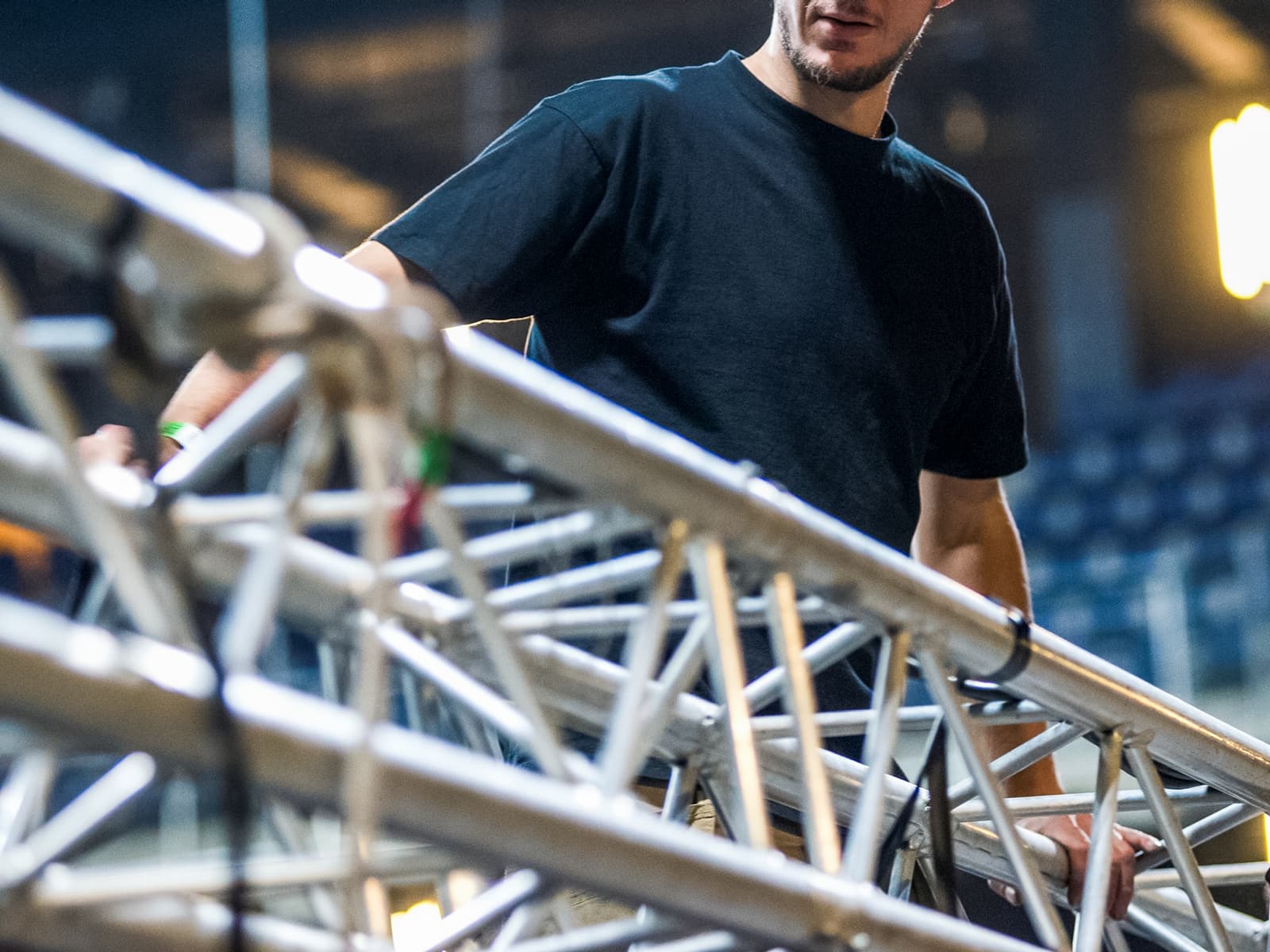
Experienced local teams can help productions react quickly to changing schedules and on-site requirements.
Safety and communication go hand in hand
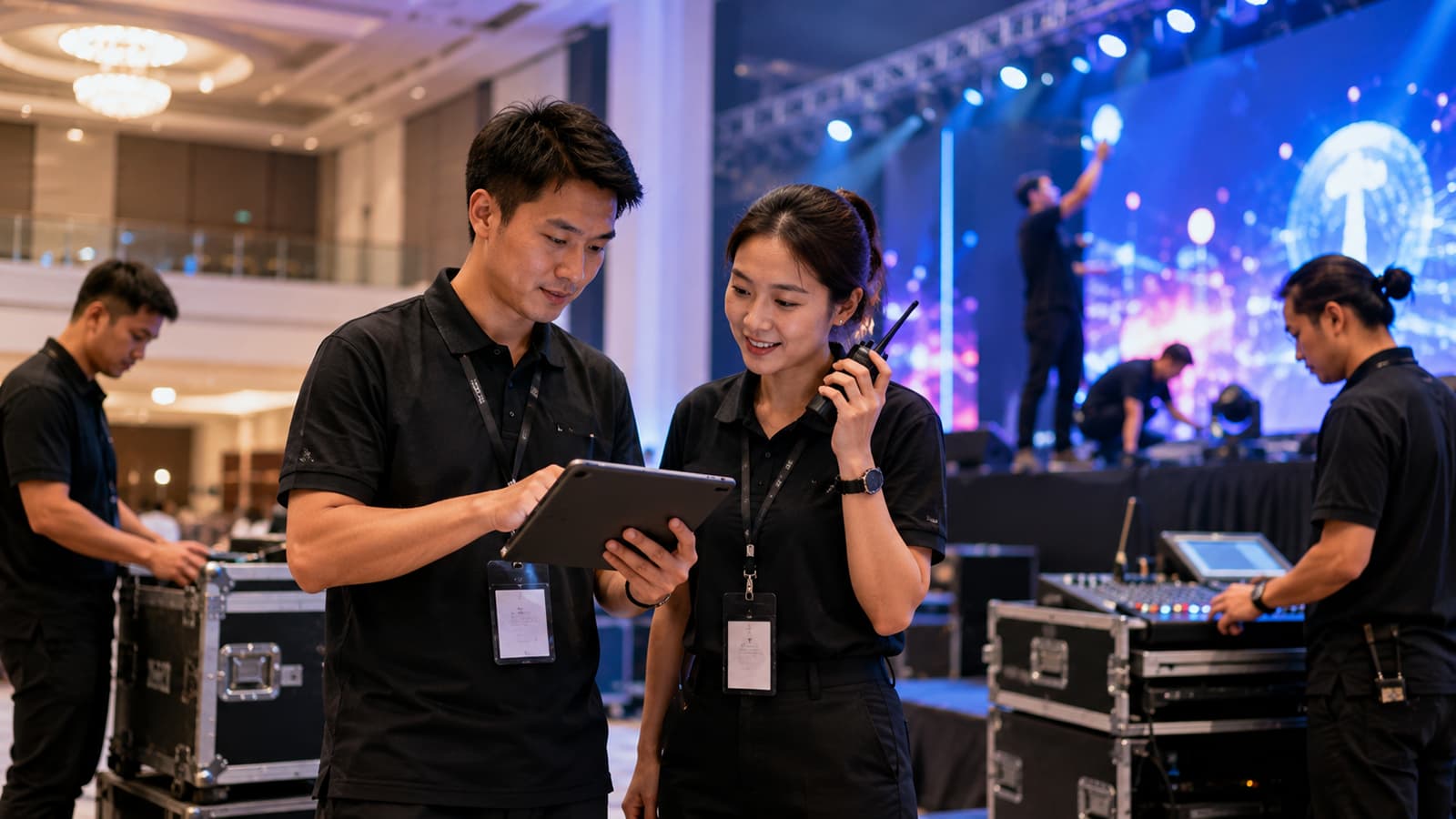
Safety remains a central part of every successful event. Good preparation, clear briefings, appropriate training, and defined communication channels help teams work confidently even under time pressure.
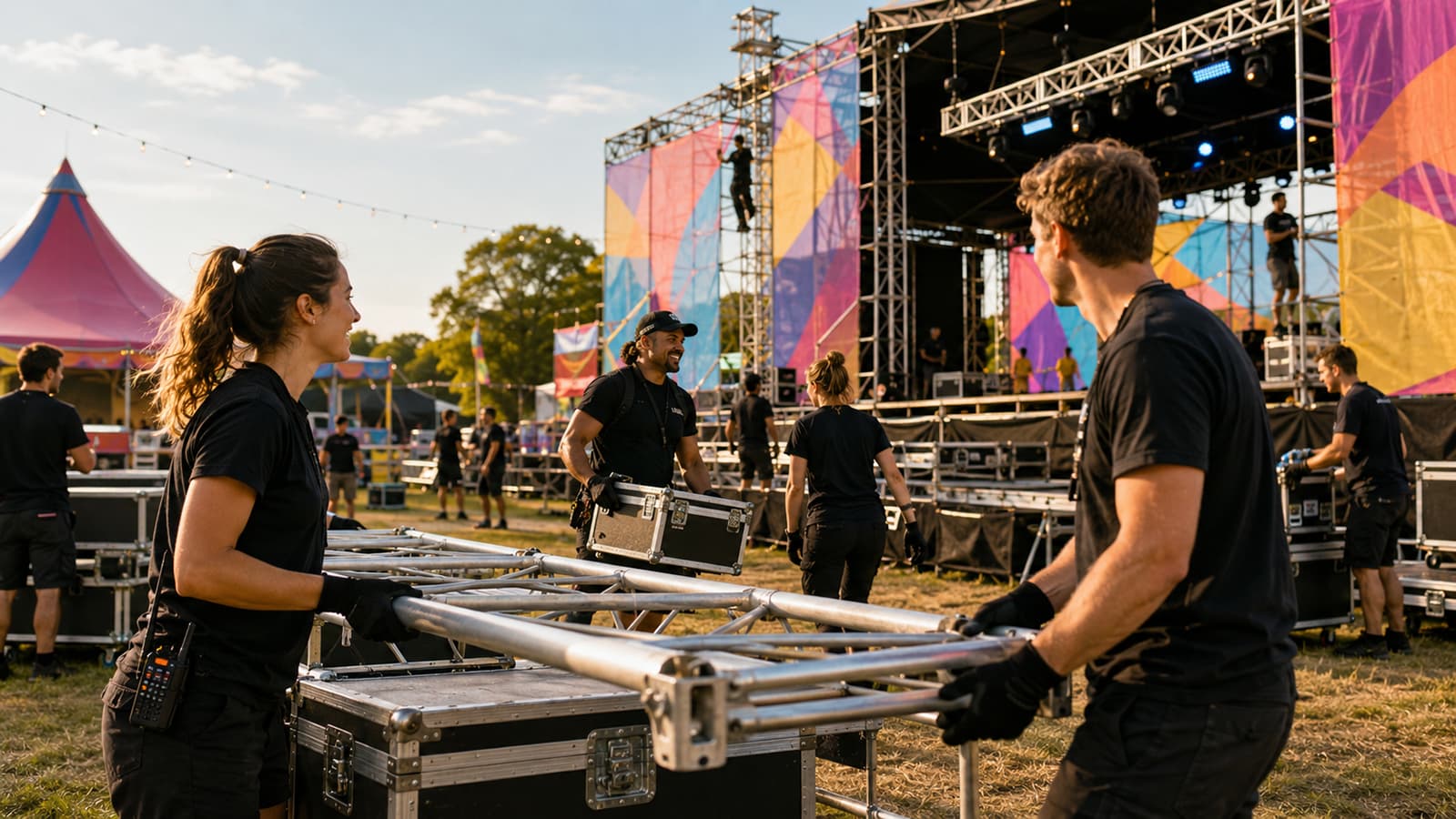
This is especially important during build-up and breakdown, when several departments are often working in parallel. Clear responsibilities reduce confusion and allow teams to react quickly when priorities change.
Communication does not need to be complicated. What matters most is that everyone knows who is responsible, where information comes from, and how changes are communicated.
Technology supports better coordination
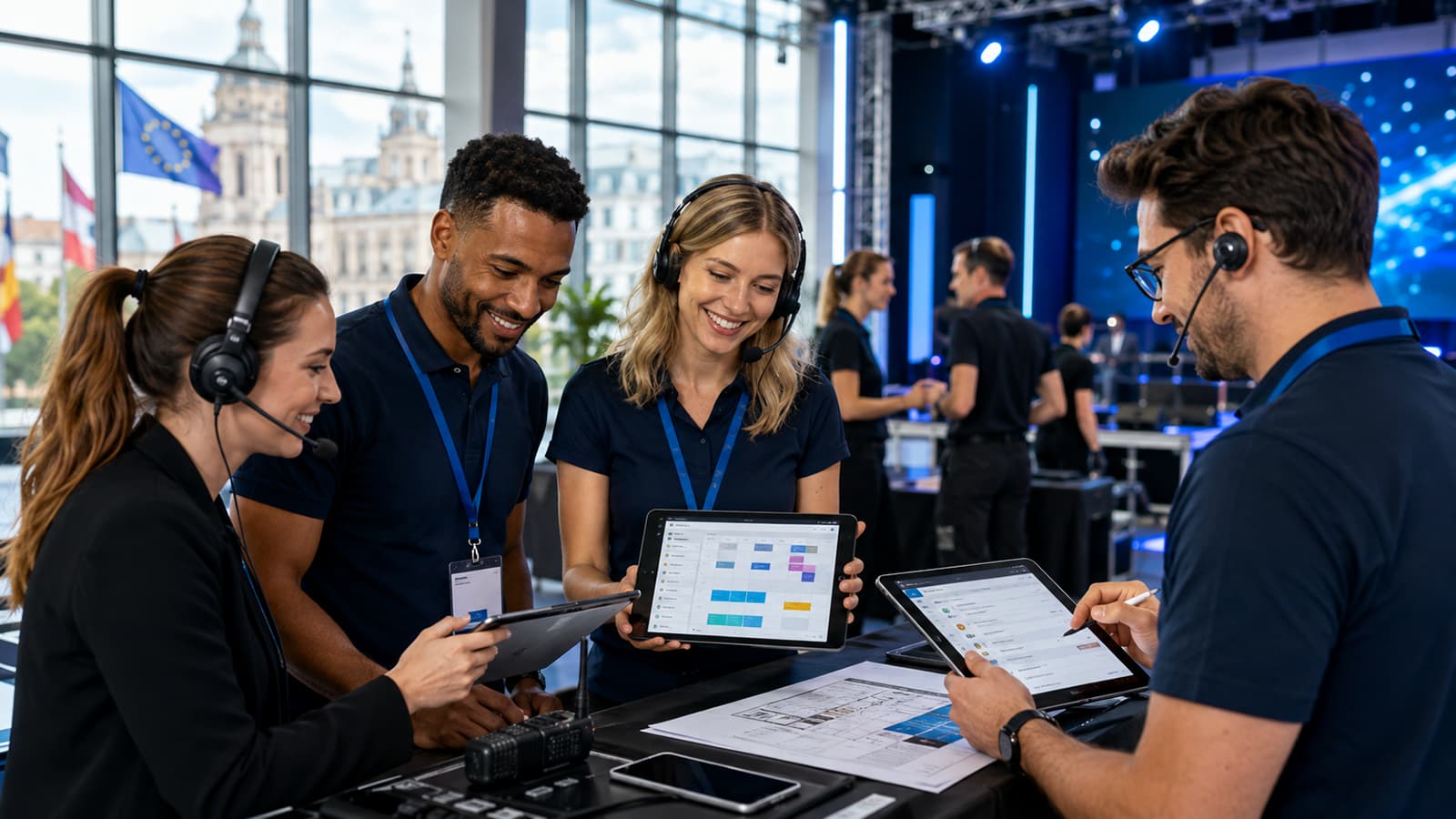
Digital tools are becoming an increasingly important part of modern crew management. Scheduling, availability management, project communication, and real-time updates can all help keep teams aligned.
Used well, technology should simplify the process rather than add another layer of complexity. The goal is not to replace personal coordination, but to give teams better information and faster access to what they need.
Typical digital workflows can support:
- Crew scheduling
- Availability checks
- Project documentation
- Shift updates
- Communication with local teams
- Time tracking and reporting
Every production needs a different approach
No two events are exactly the same. A touring show, exhibition, corporate event, arena production, and festival all have different priorities.
That is why flexible staffing models are so valuable. They allow crew sizes and skill sets to be adjusted around the actual requirements of each project instead of forcing every production into the same structure.
For smaller projects, this might mean a compact team with clearly defined responsibilities. Larger productions may require several departments, multiple shifts, and local coordination across different areas of the venue.
Long-term partnerships improve efficiency
The strongest results often come from long-term cooperation.
When organizers, technical teams, venues, and crew partners understand how each other work, processes become faster and more predictable. Expectations are clearer, communication improves, and teams can focus more of their energy on delivering the event itself.
Reliable partnerships also make it easier to react when conditions change. Instead of starting from zero every time, teams can build on existing processes and shared experience.
Key takeaway
Successful event staffing is about much more than filling positions.
It is about combining planning, communication, local knowledge, safety, technology, and experienced people into one reliable process.
For the event industry, that means connecting the right people, at the right place, at the right time — and creating the conditions they need to do their best work.